A Celliara guide to microcurrent devices
How Often Should You Use a Microcurrent Device?
What Microcurrent Devices Are and Where They Come From
Microcurrent has roots in clinical rehabilitation and wound care, where researchers studied whether low-level electrical stimulation could support tissue repair. Aesthetic devices came later, first in professional settings and then as smaller consumer devices.
The defining characteristic of microcurrent is that it operates below the threshold of sensory perception in most users. Traditional electrical muscle stimulation (EMS) devices cause visible, involuntary muscle contractions — you feel and see the muscle firing. Microcurrent operates at far lower current levels, typically in the 10–600 microampere (µA) range, which is below the threshold for action potential generation and does not produce visible muscle contraction. The proposed mechanism is subtler: repeated sub-threshold stimulation that re-patterns neuromuscular behavior over time rather than forcing acute contraction. That proposed mechanism is one reason makers build repeated sessions into their routines; it is not evidence for any particular schedule. For the underlying biology, see our guide on what is microcurrent.
The professional-to-consumer distinction matters for frequency. Professional systems and consumer devices differ in output and waveform control, so guidance from professional settings does not transfer to a consumer device. For how often to use a particular device, the exact device’s own instructions are the authority, and this guide reports what current makers say rather than setting a schedule of its own.
The Proposed Mechanisms Behind Repeated Use
Two mechanisms are proposed to explain microcurrent’s effects. The first involves cellular energy. Laboratory research, often traced to Cheng et al. (1982), reported that specific microcurrent parameters could increase ATP production; it was laboratory research, not a study of consumer facial devices. Laboratory findings do not tell you how often to use a consumer device.
The second mechanism is neuromuscular re-education. Facial muscles, like any muscles, adapt their resting tone and positional memory in response to repeated stimulation patterns. The theory is that consistent sub-threshold microcurrent stimulation — delivered at specific frequencies and waveforms along the motor nerve pathways and across muscle bellies — gradually re-establishes or maintains the neuromuscular firing patterns associated with lifted, toned muscular position. If this mechanism is right, it would depend on repetition, which is one rationale makers give for repeated sessions; it is not evidence that any particular schedule works better than another.
Session length is set by each device’s maker for that device. Follow it rather than shortening or extending sessions.
What the Clinical Evidence Says About Frequency
The outcome studies in Celliara’s evidence record were each run on one device with its own schedule: NuFACE’s ENGAGE study of the earlier Trinity used once-daily sessions for 60 days in 56 people, and ZIIP’s own study of the Halo used two sessions a day, two days on and one off. Neither compared schedules, so neither shows that one frequency works better than another.
Published studies of microcurrent for facial applications are few and small. The outcomes in Celliara’s evidence record are modest, photograph- or instrument-graded improvements in contour and tone, not dramatic transformations, and that record does not establish measured, statistically significant changes in specific features such as the jawline, cheekbones or brow.
Makers build an ongoing maintenance phase into their routines rather than an end point. Celliara’s current evidence record does not establish how long any effect persists after use stops.
What Microcurrent Does and Does Not Do
The outcomes in Celliara’s evidence record are modest, photograph- or instrument-graded improvements in contour and tone. They are not the same as the structural tightening professional RF aims for, and they are not guaranteed for every user.
Microcurrent is not equivalent to injectable neurotoxins (Botox, Dysport) or fillers. Injectables work by blocking neuromuscular transmission to relax hyperactive muscles (toxins) or by physically volumizing tissue (fillers). The mechanisms have no overlap with microcurrent. Comparisons in device marketing between microcurrent and “natural Botox” are misleading. Microcurrent is not a substitute for medical aesthetic procedures.
Any change you notice right after a single session should not be used to judge a device. Each maker sets the routine over which it expects change.
How Manufacturer Schedules Differ
Several makers Celliara has reviewed set a front-loaded routine followed by less frequent sessions, but the numbers differ by device, so the schedule to follow is the one in your exact device’s manual:
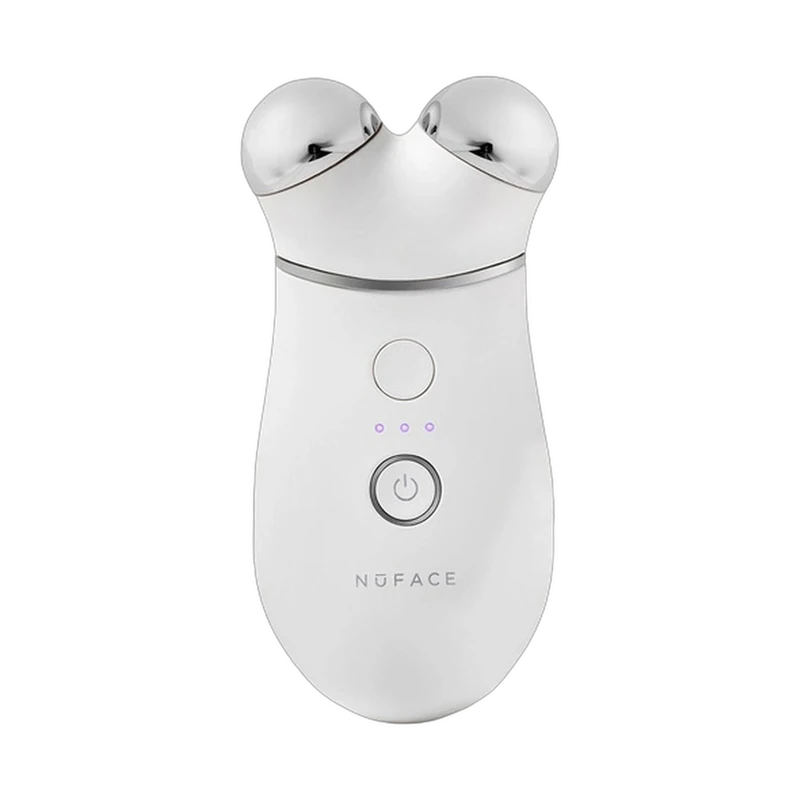
- NuFACE Trinity+: at least five minutes a day, five times a week for the first 60 days, then two to three times a week.
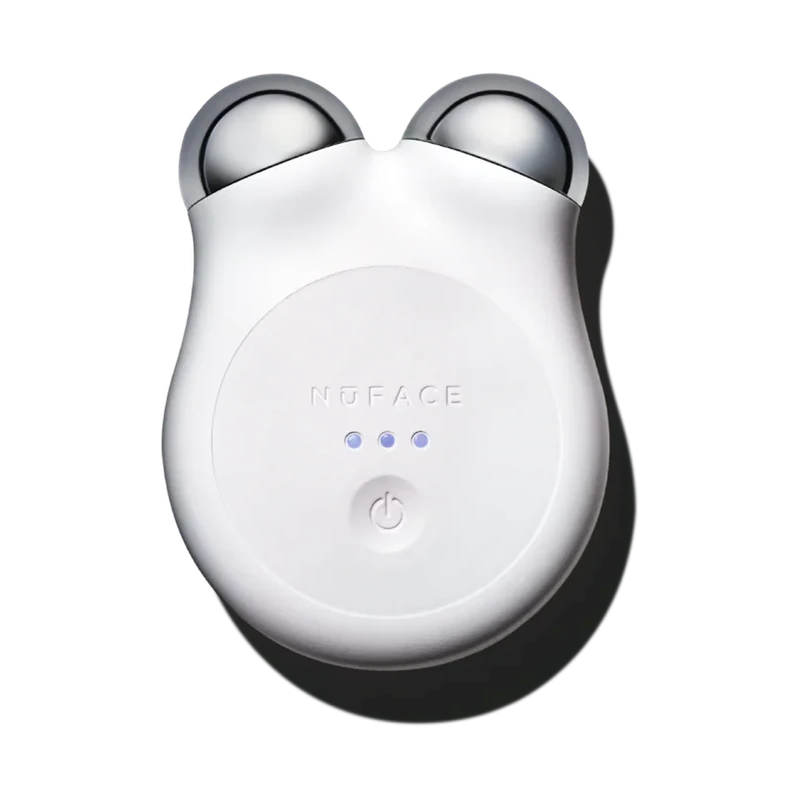
- NuFACE MINI+: five-minute sessions, five days a week for the first 60 days, then two or three a week, with 24 hours between sessions.
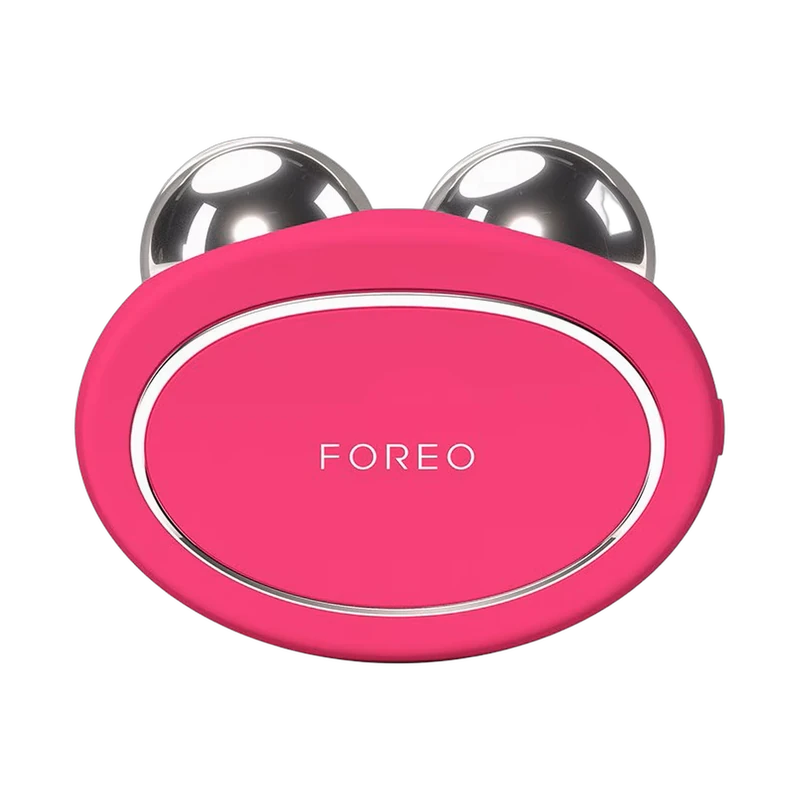
- FOREO BEAR 2: five sessions a week for the first 60 days, then two to three a week, never more than once in 24 hours and no more than three minutes per area.
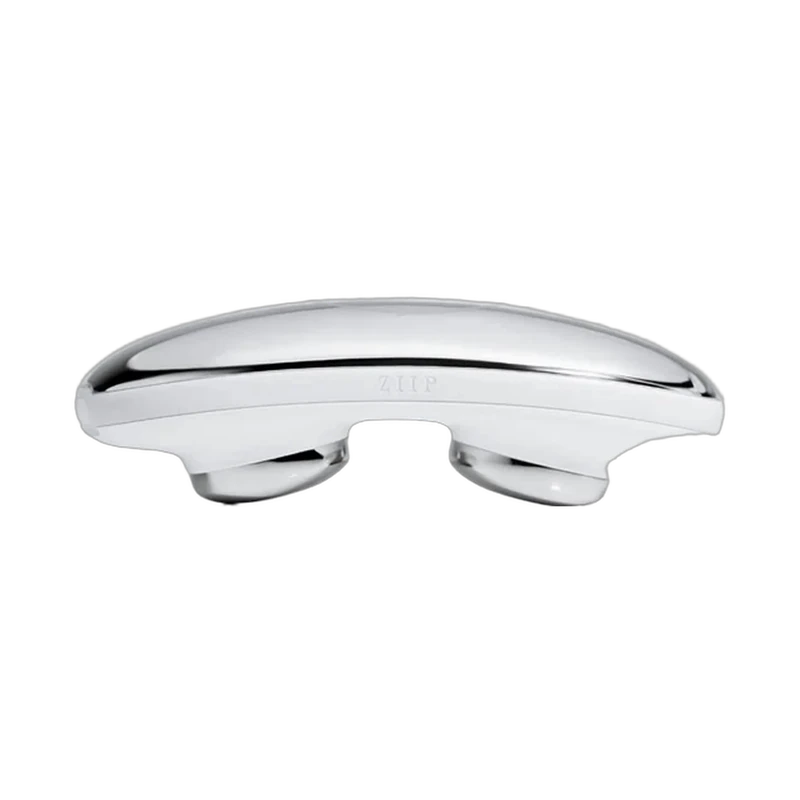
- ZIIP Halo: a built-in four-minute facial, three to five sessions a week, and up to six on a short-term treatment plan.
These are each maker’s instructions for its own device, not a Celliara schedule, and they are not interchangeable: a routine written for one device’s output and session length does not carry over to another.
Individual response varies, and Celliara’s evidence record does not establish a week by which change should appear. Standardized photographs under consistent lighting are a more reliable way to judge gradual change than day-to-day impression.
Microcurrent devices whose schedules are reported here
Current facts and scores come from each device’s Celliara review.
Frequency, Session Length, Gel, and Device Variables
Spacing is part of each maker’s routine too: NuFACE allows 24 hours between MINI+ sessions, and FOREO says never more than once in 24 hours. Follow your device’s spacing rather than a general rule.
Session length is device-specific as well — NuFACE’s routine is five minutes, ZIIP’s built-in facial four, and FOREO limits each area to three minutes — because each is set for that device. Follow the manufacturer’s session length.
Microcurrent needs a conductive medium between the device and the skin, and makers set which one: NuFACE requires its activator every session, while FOREO allows a thin layer of water-based gel or serum. Use the medium your device’s manufacturer specifies. For more, see our guide to microcurrent conduction gel.
Waveform variations across devices are a real factor that is difficult to evaluate as a consumer. Different brands use different proprietary waveforms — alternating current, pulsed DC, or combination waveforms — at different frequencies and amplitudes. How much these differences matter is not established in Celliara’s evidence record. When switching devices, follow the new device’s own schedule rather than carrying over the old one. For device-specific comparisons including waveform and output characteristics, see our head-to-head of the NuFACE Trinity+ vs ZIIP Halo and our comprehensive microcurrent device rankings.
Contraindications
Each manufacturer sets who should not use its device, so read the exact device’s current warnings before you buy or use one. Where a manufacturer says not to use its device, a clinician’s advice does not change that. FOREO, for example, says not to use the BEAR 2 with metal implants, epilepsy or cancer, or over raised moles or red skin. Check the exact device’s own warnings for:
- Pacemakers or other implanted electrical devices
- Pregnancy
- Epilepsy
- Metal implants in the treatment area, including dental implants, plates and screws
- Active skin infections, open wounds or inflamed skin
A lower intensity setting is not a way around a manufacturer’s restriction.
Frequently Asked Questions
What happens if I skip sessions during the loading phase?
Celliara’s evidence record does not establish what missed sessions do to results, and there is no general rule for making them up. Carry on with your device’s own schedule, and check its manual or the maker’s support if you have missed a longer stretch.
Is morning or evening use better for microcurrent?
Timing relative to sleep and the circadian cycle has not been studied rigorously for microcurrent specifically. Practically, the timing that makes consistent adherence most achievable is the right timing for you. If morning sessions mean you skip fewer days, morning is better.
Can you do two microcurrent sessions in one day?
Follow your device’s limit: NuFACE allows 24 hours between MINI+ sessions, and FOREO says never more than once in 24 hours. ZIIP’s own study of the Halo used two sessions a day, but its published routine is three to five sessions a week; a study schedule is not an instruction for you.
How do I know if my microcurrent device is actually working?
The most reliable indicator is standardized weekly photography under consistent, controlled conditions — same location, same light source and direction, same camera distance, no makeup, same time of day. Changes, where they appear, are modest. If you see no change after following your device’s full routine, that is a possible outcome — Celliara’s evidence record does not establish visible results for every user — not proof that you used it wrongly.
Where to go next
See current recommendations
Our ranked page names the devices we recommend and who each one suits.
- Best Overall NuFACE Trinity+
- Best for Fine Control + Gel Flexibility FOREO BEAR 2
- Best for First-Time Buyers NuFACE Mini+
Decide between two devices
Explore the category
What separates the devices Celliara has reviewed, with every review in one place.
Microcurrent devices