A Celliara guide to microcurrent devices
What Is Microcurrent?
What Is Microcurrent? The Science Behind Facial Electrical Stimulation
Microcurrent has moved from physical therapy clinics into bathroom cabinets — but the marketing around it often obscures what the technology actually does. This guide covers the mechanism, the evidence, the limitations, and who is likely to benefit, so you can make an informed decision rather than an aspirational one.
The Short Answer
Microcurrent therapy delivers low-level electrical current — measured in microamperes (µA), or millionths of an ampere — to facial muscles and skin tissue. The goal is to stimulate cellular activity, support collagen and elastin production, and tone facial muscles over time.
The technology is not new. Microcurrent has been used in physical therapy and wound healing since the 1970s. Consumer facial devices are a lower-power adaptation of those clinical tools. Where one is FDA-cleared, the clearance belongs to that exact device and its stated use, such as facial toning — not to the category, and not to treating any medical condition.
What makes microcurrent worth understanding is the mechanism. Unlike most topical skincare, which works at the surface, microcurrent operates at the cellular level. Whether that translates into visible results depends on the device, the protocol, and realistic expectations about what the evidence actually supports.
How Microcurrent Works
The Bioelectric Basis
The human body runs on electrical signals. Cellular communication, tissue repair, and muscle contraction all depend on electrochemical gradients across cell membranes. Microcurrent therapy is premised on the idea that introducing a very low-level external current — one that closely mimics the body’s own bioelectric signals — can enhance those natural processes.
The primary proposed mechanism is stimulation of adenosine triphosphate (ATP) production. ATP is the energy currency of the cell. When cells have more of it, they can perform metabolic functions — including the synthesis of structural proteins like collagen and elastin — more efficiently.
The Laboratory Evidence
Laboratory research, often traced to Cheng et al. (1982), has been cited in discussions of how low-level electrical stimulation may affect cellular activity such as ATP production.
It is important to note what that research does and does not show: it was not a human randomised controlled trial, and it does not establish the same effects, or any cosmetic outcome, for consumer facial microcurrent devices. It suggests a possible pathway — more ATP means more fuel for fibroblasts, which produce collagen — but the distance between a laboratory finding and a lifted jawline is significant.
Muscle Re-Education
At the muscular level, microcurrent is thought to work similarly to electrical muscle stimulation (EMS) used in physical therapy, but at a much lower intensity. Standard EMS devices operate at milliamp levels and cause visible, sometimes forceful muscle contractions. Microcurrent devices operate at microamp levels — typically 1–1000 µA — well below the threshold of sensory perception. Most users feel nothing, or at most a mild tingle.
The theory is that this sub-sensory stimulation re-educates and gradually tones facial muscles through consistent, repeated sessions. The facial muscles, like any muscles, respond to regular stimulation — the argument is that microcurrent provides a structured stimulus that supports tone and lift over time.
Circulation and Lymphatic Flow
Research on electrical microstimulation more broadly indicates improvements in local blood flow and lymphatic drainage. This likely contributes to the refreshed, less-puffy appearance many users report immediately after treatment — an effect that is real but short-lived without consistent use.
What the Evidence Actually Shows
Consumer microcurrent sits in an evidence tier that is honest to describe as: biologically plausible, with supporting small-scale human data, and a strong track record in adjacent medical applications.
Industry-sponsored studies from device manufacturers have reported improved facial contour scores at 5 and 60 minutes post-treatment, but independent replication of these findings remains limited.
The wound healing literature provides stronger, longer-standing support. Multiple studies have demonstrated that low-level electrical stimulation accelerates wound closure and tissue regeneration in clinical settings. This is a medically accepted application of the same underlying principle — it does not directly prove cosmetic outcomes, but it confirms the mechanism is not invented.
What the Evidence Supports
- A possible cellular mechanism involving ATP production, discussed in laboratory research; this does not establish cosmetic outcomes for consumer facial devices.
- Measurable short-term toning and lifting effects in small human studies
- A genuine track record in medical applications including wound healing and muscle rehabilitation
- FDA clearance for facial toning on specific consumer devices (each clearance covers that exact device)
What the Evidence Does Not Support
- Permanent or structural change to skin or muscle from consumer device use alone
- Results equivalent to in-office procedures such as HIFU, radiofrequency, or surgical intervention
- Long-term anti-aging outcomes backed by large-scale, double-blind randomised controlled trials — Celliara’s verified evidence record does not include such trials for at-home microcurrent
- Most consumer device studies are small, short-term, and frequently industry-funded
This is not a reason to dismiss the technology. It is a reason to approach it with calibrated expectations rather than marketing-driven ones.
How to Use a Microcurrent Device
Conductive Gel Is Non-Negotiable
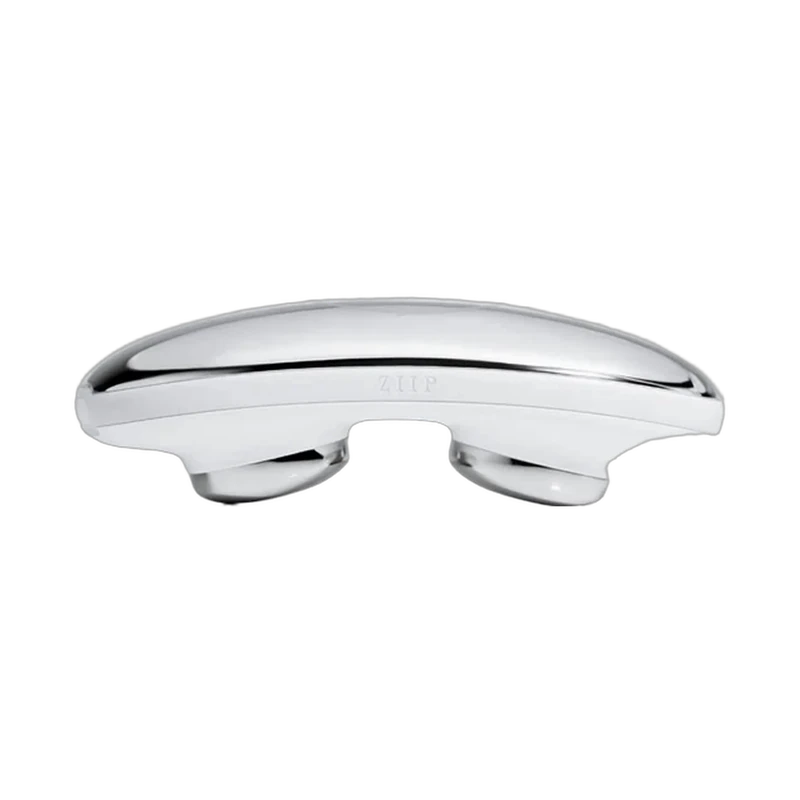
Microcurrent requires a conductive medium between the device and skin. Skipping gel is the single most common user error, and it matters: without adequate conductivity, current delivery is inconsistent and surface resistance increases. Which medium to use depends on the device, because makers set different rules: FOREO says any water-based gel or serum works with the BEAR 2, while ZIIP’s warranty excludes conductive media other than ZIIP gel. Follow the exact device’s instructions.
Technique and Direction
Current is delivered via two conductive probes, spheres, or a conductive surface. Stroke direction and sequence are set by each device’s maker, so follow the exact device’s instructions or companion app for each facial zone.
Consistency Is the Determining Factor
This is not a one-session technology. Session length and frequency, and how long to keep going before you judge results, are set by each device’s instructions; results depend on following them consistently.
Results are not permanent: keeping them means continuing the routine the device’s maker describes, and stopping treatment entirely typically results in gradual return to baseline.
Who Microcurrent Is For
Microcurrent suits people who want a non-invasive, low-risk tool to support facial tone and skin quality as part of a broader routine. It is most likely to suit:
- Adults in their 30s to 50s noticing early loss of definition in the jawline, brow, or cheekbones
- People looking for a complement to topical skincare rather than a replacement for it
- Those who are consistent — results are directly tied to protocol adherence
- Anyone seeking an evidence-informed option before considering more invasive procedures
If you already use actives like retinoids or vitamin C, check the device’s instructions and ask your dermatologist about combining them. To see which devices Celliara currently recommends, see our ranking of the best microcurrent devices.
Who Should Approach With Caution
Each manufacturer sets who should not use its device, and the restrictions differ between devices. FOREO, for example, says not to use the BEAR 2 with metal implants, epilepsy or cancer, or over raised moles or red skin. Check the exact device’s own warnings, including for a pacemaker or other implanted electrical device. Where a manufacturer says not to use its device, don’t use it.
Other situations to check against the exact device’s warnings before use:
- Pregnancy
- Active skin infections, open wounds, or rosacea flare-ups in the treatment area
- Recent Botox or filler injections — ask the clinician who treated you when microcurrent can be used near the injection sites
- Metal implants in the face or jaw
If any of the above apply and the maker does not rule out use, ask a dermatologist or physician before starting; their advice does not override a manufacturer’s warning.
Microcurrent vs. Other At-Home Devices
It is worth being clear about where microcurrent sits relative to other facial device categories, since these are often conflated. LED light therapy works through photobiomodulation — light wavelengths penetrating tissue — with a different mechanism and different target outcomes (primarily inflammation, pigmentation, and collagen via red light). Radiofrequency devices use heat energy to stimulate deeper collagen remodelling and typically address skin laxity rather than muscle tone. EMS (also called NMES) devices use higher current levels and cause visible muscle contractions — they are not the same as microcurrent and should not be used interchangeably.
Each technology has distinct applications. For a direct comparison of microcurrent and radiofrequency, this breakdown covers the key differences.
The Honest Limitations
The evidence base for at-home microcurrent is real but thin by the standards of rigorous clinical science. The foundational mechanism is supported; the leap to specific cosmetic claims often outpaces the research. Studies are typically small, short, and frequently funded by device manufacturers — which does not make them wrong, but it means independent scrutiny is limited.
Results also vary. Skin type, device quality, technique, and consistency all influence outcomes. The technology does not produce uniform results, and regulatory status belongs to each exact device and its intended use, so a clearance for one device says nothing about another.
That said: microcurrent is low-risk, non-invasive, and built on a coherent biological rationale. For someone willing to commit to a consistent protocol and maintain realistic expectations, the evidence suggests it can deliver meaningful, if moderate, cosmetic benefit.
The Bottom Line
Microcurrent is a legitimate technology with a credible mechanism, a history in medical applications, and a growing body of cosmetic evidence — most of it preliminary. It is not a substitute for sunscreen, good actives, or professional treatments when those are warranted. What it is: a consistent, low-risk tool that, used correctly over time, research suggests can support facial tone, reduce the appearance of sagging, and contribute to overall skin quality.
Approach it as a long-term commitment rather than a quick fix, use the gel, follow the technique, and assess results honestly after eight weeks. That is the framework within which microcurrent tends to perform.
Microcurrent devices Celliara has reviewed
Current facts and scores come from each device's Celliara review.
Where to go next
See current recommendations
Our ranked page names the devices we recommend and who each one suits.
- Best Overall NuFACE Trinity+
- Best for Fine Control + Gel Flexibility FOREO BEAR 2
- Best for First-Time Buyers NuFACE Mini+
Decide between two devices
Explore the category
What separates the devices Celliara has reviewed, with every review in one place.
Microcurrent devices