Document-Based Review
Analysis identifies whether information comes from product documentation, regulatory records, or third-party research.
EDITOR'S CHOICE 2026
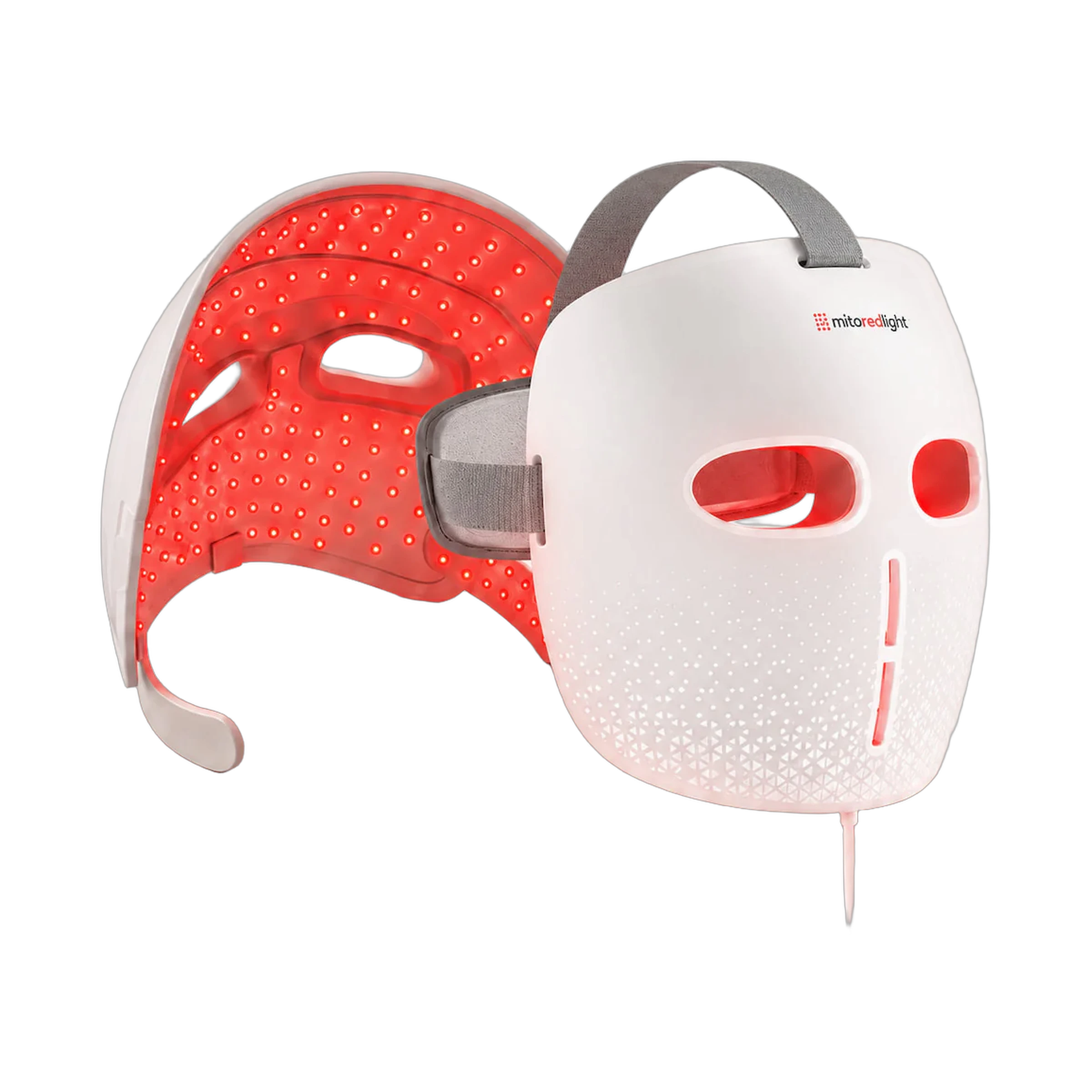
MitoGLOW combines 1,064 LEDs, four targeted wavelengths, five treatment modes, and FDA 510(k) clearance for wrinkles and mild-to-moderate acne in a cordless face mask. Its inclusion of blue and amber light broadens the treatment range beyond standard red and near-infrared masks, making it a technically distinctive option for users addressing both aging and acne.
FDA 510(k) cleared for wrinkles and mild-to-moderate acne
1,064 LEDs across 266 four-chip diodes
Four wavelengths, including 590nm amber
Five targeted treatment modes
GREAT BUY
Analysis identifies whether information comes from product documentation, regulatory records, or third-party research.
Manufacturer claims are distinguished from independently verifiable facts.
Any displayed score links to its criteria, evidence record, and methodology version.
Brands cannot purchase rankings or editorial recommendations.
Celliara may earn a commission without affecting the price or verdict.
Quick Verdict
A versatile, evidence-supported LED mask designed for visible signs of aging and mild-to-moderate acne, combining four wavelengths, five targeted modes, and cordless convenience in one premium device.
A versatile premium LED mask for aging and mild-to-moderate acne
MitoGLOW earns Celliara’s recommendation for its four wavelengths, targeted modes, cordless design, and FDA clearance across aging and acne use cases.
People addressing both visible signs of aging and mild-to-moderate acne.
Users who want one cordless device with multiple targeted treatment modes.
Those committed to consistent, untethered full-face treatment sessions.
The device occupies the premium end of the at-home mask category.
Warranty coverage is limited to one year.
The governed protocol calls for three to six sessions per week.
Cleared for wrinkles and mild-to-moderate acne.
Blue, amber, red, and near-infrared light broaden its use cases.
Targeted modes support different skin goals.
Specifications verified against manufacturer documentation and the governed regulatory record. Where ranges exist, Celliara reports the published interval.
Source: Mito Red Light
FDA 510(k) cleared — not just registered. Real regulatory review for wrinkles and acne endpoints. Most competitors cannot say the same.
Most LED face masks are described as "FDA registered" or "FDA compliant." The MitoGLOW is neither of those — it is FDA 510(k) cleared. That distinction matters.
FDA registration simply means a device manufacturer has listed their product in the FDA database. It requires no clinical evidence, no testing submissions, and no independent review. Nearly every consumer beauty device is FDA registered. It is not a clinical credential.
FDA 510(k) clearance is a different category entirely. To receive 510(k) clearance, a manufacturer must submit a premarket notification demonstrating that the device is substantially equivalent to a legally marketed predicate device. The FDA reviews the submission, evaluates safety and performance data, and issues a clearance decision. It is not FDA approval — that standard is higher still, reserved for devices without a predicate — but it is a real regulatory threshold backed by evidence review.
For the MitoGLOW, the FDA 510(k) clearance covers two specific clinical endpoints: wrinkles and mild-to-moderate acne. Those are the indications Mito Red Light submitted data for and received clearance on. That means there is a regulatory record acknowledging that the device produces these effects at a level the FDA found acceptable for a consumer device. No other LED face mask in the $400–$600 range can claim equivalent regulatory standing for both endpoints simultaneously.
The 590nm amber wavelength is a genuine differentiator — specifically targets redness and vascular irregularity that 630nm and 830nm do not address.
The MitoGLOW uses four wavelengths: 465nm (blue), 590nm (amber), 630nm (red), and 830nm (near-infrared). Three of those are common to most premium LED masks. The fourth — 590nm amber — is not.
465nm blue: Operates at the surface. Blue light is clinically validated for antimicrobial action against Cutibacterium acnes (formerly Propionibacterium acnes), the bacteria primarily responsible for inflammatory acne. It is also absorbed by porphyrins in sebaceous follicles, generating reactive oxygen species that kill bacteria without antibiotic resistance risk. The key limitation of blue light is depth — it penetrates only into the upper dermis.
630nm red: The workhorse wavelength for collagen stimulation. 630nm activates fibroblast activity via cytochrome c oxidase, increasing collagen type I and III synthesis. Most published LED photobiomodulation studies targeting wrinkles, firmness, and skin texture use this wavelength range. At 18 mW/cm² in Anti-Aging mode, the MitoGLOW delivers effective dosing for collagen endpoints in a 10-minute session.
830nm near-infrared: Deeper penetration than red — into the dermis and supporting tissue layers. 830nm supports cellular renewal, reduces inflammatory cytokine expression, and complements the 630nm red stimulus in the Deep Renewal mode. The combination of 630nm and 830nm running simultaneously at 25 mW/cm² is the highest-irradiance mode the device offers.
590nm amber: This is what neither the CurrentBody LED Mask nor the Omnilux Contour Face includes. Amber light at 590nm is absorbed primarily by oxyhemoglobin, making it particularly effective at reducing erythema (redness), visible capillary visibility, and uneven skin tone driven by vascular irregularity. It is not a collagen stimulus — it is a tone and redness corrector. Users dealing with rosacea, post-inflammatory erythema, or persistent redness have a specific wavelength targeting their concern. That is what sets the MitoGLOW apart from comparable masks.
5 modes with different irradiance levels and wavelength combinations — not presets for marketing, but calibrated protocols for specific skin targets.
The MitoGLOW's five modes are not arbitrary presets. Each one isolates or combines wavelengths for a specific skin concern, with different irradiance levels calibrated to the target application.
Mode 1 — Anti-Aging (630nm Red, 18 mW/cm²): The primary collagen mode. 630nm red activates fibroblasts and drives type I collagen synthesis. At 18 mW/cm², a 10-minute session delivers approximately 10.8 J/cm² — within the range used in published collagen studies. Use this mode 4–5× per week for baseline anti-aging maintenance.
Mode 2 — Purify (465nm Blue, 5 mW/cm²): Active acne treatment. Blue light at 465nm is bactericidal against C. acnes and reduces sebum oxidation in follicles. Irradiance is lower at 5 mW/cm² because higher-intensity blue light requires limited daily exposure — excessive blue light carries phototoxic risk in sensitive skin types. Use 2–3× per week when dealing with active breakouts, not daily.
Mode 3 — Calm (590nm Amber, 5 mW/cm²): Redness and tone correction. Amber light targets oxyhemoglobin in superficial vasculature, reducing visible redness and improving evenness. Lower irradiance is appropriate here — vascular targets respond to sustained gentle exposure more than high-dose bursts. Use after skin irritation, post-procedure, or on days when inflammation is elevated.
Mode 4 — Deep Renewal (630nm Red + 830nm NIR, 25 mW/cm²): The highest-output mode. Combining 630nm collagen stimulus with 830nm NIR penetration drives the deepest cellular renewal response. At 25 mW/cm², a 10-minute session delivers approximately 15 J/cm² — the highest dose the device delivers. Reserve this for weekly or twice-weekly deep sessions, not daily use.
Mode 5 — Clarify (465nm Blue + 630nm Red, 16 mW/cm²): The dual-action acne and skin health mode. Blue tackles active bacteria; red supports tissue recovery and reduces post-acne inflammation. This is the most practical mode for acne-prone users on non-flare days — maintaining skin health while managing ongoing bacterial load without the intensity of Mode 2 alone.
1,064 LEDs vs ~660 on CurrentBody — higher density means more uniform coverage, fewer irradiance gaps across the face.
LED count is a commonly misunderstood specification. The number alone does not determine how well a mask works — irradiance, wavelength selection, and coverage geometry all matter equally. But LED density is a real physical parameter that affects how evenly treatment is delivered across the face.
A mask with fewer LEDs — even at comparable total wattage — creates areas of higher and lower irradiance between diode positions. At close range (a face mask is essentially contact or near-contact distance), uneven LED distribution translates to uneven treatment. Some facial zones get more dose; others get less.
The MitoGLOW's 1,064 LEDs across 266 four-chip diode clusters, distributed across the full face panel area, produce a more uniform irradiance field across the facial surface than masks with ~600–700 LEDs. The CurrentBody LED Mask uses approximately 660 LEDs. Omnilux Contour Face uses a different architecture with panel sections.
The four-chip diode design compounds this: rather than single-wavelength diodes, each cluster fires all four wavelengths simultaneously when operating in combination modes. This means every point on your face receives all active wavelengths from every diode in range — not from alternating single-wavelength LEDs across the panel.
5,200mAh supports 6–10 sessions per charge — genuinely untethered operation that removes the friction of corded masks.
The MitoGLOW runs on a 5,200mAh internal battery — one of the largest battery capacities in the consumer LED face mask category. At 60–70 minutes of runtime per charge, it supports 6–10 full sessions before needing a recharge (assuming 5–10 minutes per session). The 3-hour recharge time means overnight charging covers a full week of daily sessions without thinking about it.
Untethered operation matters more for LED face masks than most consumers realize. Corded masks restrict movement, create cable management challenges, and are harder to use in a comfortable lying position. A 5,200mAh battery that supports true hands-free operation removes that friction entirely.
The wearable design — flexible panels that conform to the face — means the mask can be worn while lying down, sitting, or moving through light activity. Hands-free operation for a 10-minute session is genuinely achievable without holding the mask in place or managing a cord.
For a $499 device, the battery performance is appropriate to the price. The 1-year warranty is the one area where this trade-off stands out — Mito's panels carry 3-year warranties, and the flexible battery-powered design of the MitoGLOW warrants a shorter coverage period for durability reasons.
⚠ Session distance matters — but differently for face masks
Unlike panels where distance is the critical variable, the MitoGLOW is a wearable mask — it sits directly on or within millimeters of your face. The inverse square law is largely neutralized at near-contact distance. What matters instead is session duration and frequency. Five minutes at 3–6× per week outperforms a single 30-minute session per week. Consistency is the protocol.
A consistent 5–10 minute session, 4–5× per week, will produce measurable results within 8–12 weeks. Understanding how LED light therapy works at the cellular level explains why cumulative exposure matters more than single long sessions — you are driving a mitochondrial and fibroblast response that builds over time.
Step 1 — Prep skin (2 min)
Cleanse skin before every session. LED light does not penetrate through makeup, sunscreen, or heavy moisturizers effectively — clean skin ensures full photon delivery to the dermis. Pat dry. No actives (retinol, AHA/BHA) immediately before — save those for post-session application when skin is most receptive.
Step 2 — Mode selection and session (5–10 min)
Select your mode based on the day’s goal. Anti-Aging (Mode 1) for daily maintenance collagen sessions. Deep Renewal (Mode 4) once or twice per week for maximum dose. Calm (Mode 3) on high-redness or post-irritation days. Purify (Mode 2) during active breakouts, 2–3× per week. Clarify (Mode 5) for general acne-prone skin maintenance. The mask is untethered — lie down, relax, let it run. Eyes closed is sufficient; no additional eye protection required at face-mask wavelengths in normal use.
Step 3 — Post-session application (3 min)
Apply actives immediately after your session. Retinol, Vitamin C serum, hyaluronic acid, peptides — all penetrate more effectively into LED-warmed, circulation-stimulated skin. If treating acne, apply a topical niacinamide or salicylic acid serum post-session rather than before. Follow with SPF for morning sessions — treated skin is temporarily more photosensitive and needs protection.
Red light therapy is a cumulative intervention. Published studies on LED photobiomodulation for collagen and acne consistently show better outcomes at 8–12 weeks than at 4 weeks, and better at 12 weeks than at 8. The cellular mechanism — fibroblast activation, collagen upregulation, bacterial reduction — requires sustained stimulus to produce and maintain structural changes in the dermis.
The MitoGLOW’s 60–70 minute battery removes the largest compliance barrier: forgetting to charge, dealing with cords, needing to sit near an outlet. Charge overnight, use daily, recharge when the battery indicator drops. That friction removal is underrated as a design choice — consistent use is the protocol, and anything that makes consistent use easier is directly therapeutic.
A direct view of the reviewed product and credible alternatives—so you can see the tradeoff, not just the score.
At-home LED face treatment — anti-aging, acne, and skin radiance
Daily passive red + near-infrared LED routine for skin tone, texture, and fine line support

A focused 10-minute anti-aging LED routine from an established light-therapy brand
At $499.00, MitoGLOW™ LED Red Light Therapy Face Mask is $29 above CurrentBody Skin LED Mask ($469.99 direct when checked Aug. 16, 2026) and $87 above Omnilux Contour Face ($412.00). The LED count and additional 590nm amber wavelength are measurable differentiators. The shorter 1-year warranty is the principal trade-off.
Celliara value judgmentJustified — higher LED density and additional wavelength coverage versus comparable masks at a similar price.
Ready to buy?MitoGLOW™ LED Red Light Therapy Face MaskThe details buyers most often need before making the final call.
FDA 510(k) cleared — not simply registered. The 510(k) clearance covers two specific endpoints: wrinkles and mild-to-moderate acne. This required a formal FDA premarket notification with clinical evidence review. FDA registration (which most consumer beauty devices hold) requires no clinical evidence or independent review. The MitoGLOW's clearance is a substantive regulatory credential, not a marketing claim.
The MitoGLOW has 1,064 LEDs configured as 266 four-chip diodes. The CurrentBody LED Mask has approximately 660 LEDs. Omnilux Contour Face does not disclose a specific LED count. Higher LED density produces more uniform irradiance across the face — fewer gaps in coverage between diode positions.
590nm amber light is absorbed by oxyhemoglobin in superficial vasculature. It specifically targets redness, visible capillaries, and uneven tone driven by vascular irregularity — effects that 630nm red and 830nm NIR do not address. For users with rosacea, post-inflammatory erythema, or persistent diffuse redness, amber is a distinct therapeutic wavelength. Neither the CurrentBody LED Mask nor the Omnilux Contour Face includes it.
The 5,200mAh battery delivers 60–70 minutes of runtime per charge. At 5–10 minutes per session, that is 6–14 sessions per charge. The battery recharges in approximately 3 hours. The device operates completely untethered — no cord required during sessions.
Yes. As an FDA 510(k) cleared device, the MitoGLOW qualifies for HSA and FSA purchase. At a 25–30% tax-advantaged discount, the effective cost drops to approximately $349–$374 for eligible US users. The CurrentBody LED Mask and Omnilux Contour Face are not HSA/FSA eligible — this is a meaningful financial differentiator for users with health savings accounts.
Mito Red Light recommends 3–6 sessions per week at 5–10 minutes per session. For anti-aging goals, 5× per week is the target. For active acne treatment (Mode 2), 2–3× per week. Daily use is safe for most modes — the exception is Mode 2 (Purify, 465nm blue), which is more effective at 2–3× per week for most skin types. Cumulative consistent exposure over 8–12 weeks produces the best results.
The MitoGLOW costs $30 more ($499 vs $469) and includes: 400+ more LEDs (1,064 vs ~660), four wavelengths vs two (adds 465nm blue and 590nm amber), five treatment modes vs two, a 5,200mAh battery for untethered use (CurrentBody is corded), FDA 510(k) clearance for both anti-aging and acne (CurrentBody is FDA registered only), and HSA/FSA eligibility. The CurrentBody has a 2-year warranty vs 1 year on the MitoGLOW.
The MitoGLOW is the most technically specified LED face mask in the consumer category. 1,064 LEDs, FDA 510(k) clearance for both anti-aging and acne, and four wavelengths including 590nm amber — which neither CurrentBody nor Omnilux offer — makes this a genuine step up from the current face mask standard. The 5-mode system lets you tailor sessions to specific skin goals rather than running a fixed protocol. At $499.00 with a 60–70 minute battery runtime, it is the best-equipped mask at the price point.