A Celliara guide to microcurrent devices
Why You Need a Conduction Gel for Microcurrent
The short answer
Microcurrent requires a water-based conduction gel to lower the skin’s electrical impedance and allow current to reach the facial muscles effectively. Without it, delivery is inconsistent and results diminish. Which gel to use depends on the device, so check what its maker specifies.
Why You Need a Conduction Gel for Microcurrent
A microcurrent device without conduction gel is physics working against you. Here’s exactly why the gel matters, what to look for, and how to check what your device accepts.
The Physics Behind Conduction Gel
Microcurrent devices deliver low-level electrical current — typically in the microampere range — through the surface of the skin to stimulate the underlying facial muscles and connective tissue. For that current to travel efficiently, it needs a low-resistance pathway. That pathway is the conduction gel.
Skin in its natural state has high electrical impedance. Its outermost layer, the stratum corneum, acts as a barrier — which is exactly what it’s designed to do. Dry, bare skin resists the flow of current. When impedance is high, your device has to work harder to push current through, delivery becomes inconsistent, and the treatment loses efficacy before it reaches the muscle layer.
A water-based conduction gel dramatically lowers that impedance. It creates a conductive bridge between the device’s probes and your skin, allowing the microcurrent to transfer smoothly and evenly across the treatment area. This is not optional — it is a physical requirement of the technology.
Learn how microcurrent devices work →
What Happens If You Use the Wrong Product
Using the wrong product — or nothing at all — produces two problems, one mechanical and one biological.
Mechanically: Without adequate conductivity, the current either fails to penetrate effectively or concentrates unevenly at the contact points. You get a patchy treatment with inconsistent results, and the device may produce a tingling or stinging sensation that’s more pronounced than it should be.
Biologically: Whether a moisturizer, serum or gel can serve as the conductive medium depends on its complete formulation and on the exact device’s requirements — you can’t tell from whether the ingredient list includes an oil or a silicone — so use what the device’s maker specifies. Dragging metal probes over an incompatible product without adequate slip can cause friction on already-sensitized skin.
The conclusion: whatever you use as a conduction medium needs to be one your device’s maker accepts, and formulated to actually conduct current — not just hydrate or prime the skin.
What to Look for in a Conduction Gel
Not every water-based product qualifies. Here’s what to prioritize:
- Water as the primary base. The gel needs high water content to facilitate ionic conductivity. Look for water (aqua) as the first ingredient.
- Hyaluronic acid (HA). HA is hygroscopic — it draws and retains moisture at the skin surface, which supports sustained conductivity throughout the treatment session. It also delivers genuine hydration to the skin while the device is working.
- Enough slip for smooth probe glide. The probes need to move across the face without dragging. A gel that’s too thin won’t provide enough lubrication; one that’s too thick may interfere with contact.
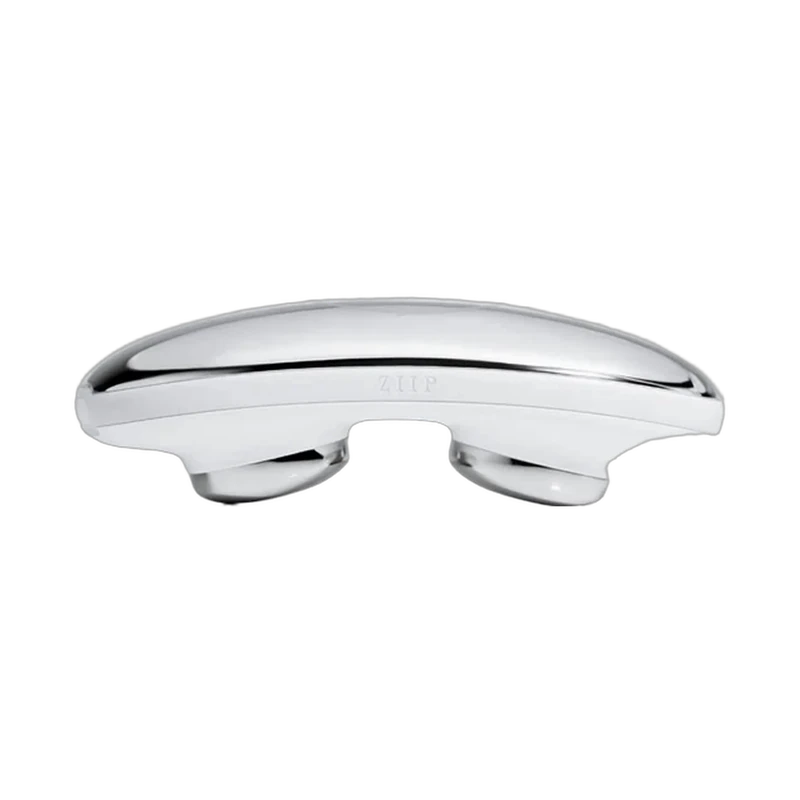
- Compatibility with your device. Makers set their own rules: FOREO states that any water-based gel or serum works with the BEAR 2, while ZIIP’s warranty excludes conductive media other than ZIIP gel. Check the exact device’s instructions and warranty before you choose a gel.
NuFACE Aqua Gel Activator: The Gel Made for NuFACE Devices
The NuFACE Aqua Gel Activator was formulated specifically for NuFACE devices and meets every requirement listed above.
It combines NuFACE’s proprietary IonPlex complex (a blend of trace minerals and electrolytes designed to enhance conductivity) with hyaluronic acid for surface hydration. The formula is water-based, free of silicones, and provides the right consistency for smooth probe movement. It functions as both conduction medium and treatment serum simultaneously — meaning you’re not adding extra steps, you’re compressing two functions into one.
The 10 oz size is the practical choice for regular users.
If you use another brand’s device, check that maker’s gel requirements first: ZIIP’s warranty, for example, excludes conductive media other than ZIIP gel.
Alternatives Worth Knowing
ZIIP Nano Current Serum (Golden Gel). ZIIP’s proprietary gel is formulated for their nano and microcurrent devices and contains a range of active peptides alongside its conductive base. For ZIIP device users it is the gel to use, because ZIIP’s warranty excludes other conductive media; it is considerably more expensive. Not necessary for NuFACE users.
Aloe vera gel, only where the maker allows it. FOREO states that any water-based gel or serum, aloe vera gel included, works with the BEAR 2. Other makers specify their own gel, and ZIIP’s warranty excludes other conductive media, so use aloe only on a device whose instructions allow it. The trade-off: no proprietary conductivity enhancement, no HA-level hydration retention, and quality consistency varies significantly between brands.
Microcurrent devices Celliara has reviewed
Each maker sets its own gel requirements. Current facts and scores come from each device's Celliara review.
The Bottom Line
Conduction gel is not a marketing add-on. It is the mechanism by which your microcurrent device actually works. Skip it or substitute carelessly, and you are reducing a precision tool to expensive face massage. Use the right formulation — one your device’s maker accepts — and the device functions as designed.
For NuFACE devices, the NuFACE Aqua Gel handles this correctly: it’s purpose-built for the job, widely available, and it removes the guesswork from a step that shouldn’t require guesswork. For any other device, use the gel its maker specifies.
See the best at-home microcurrent devices →
This article is for informational purposes only and does not constitute medical advice. See our full disclaimer. Celliara does not independently test devices. See our editorial policy for how we evaluate and score products.
Where to go next
See current recommendations
Our ranked page names the devices we recommend and who each one suits.
- Best Overall NuFACE Trinity+
- Best for Fine Control + Gel Flexibility FOREO BEAR 2
- Best for First-Time Buyers NuFACE Mini+
Decide between two devices
Explore the category
What separates the devices Celliara has reviewed, with every review in one place.
Microcurrent devices